
Before the advent of scientific research, many cultures attributed mental disorders to supernatural causes, often believing that the afflicted were possessed by malevolent spirits. Exorcism was commonly practised as a means of healing those thought to be possessed.
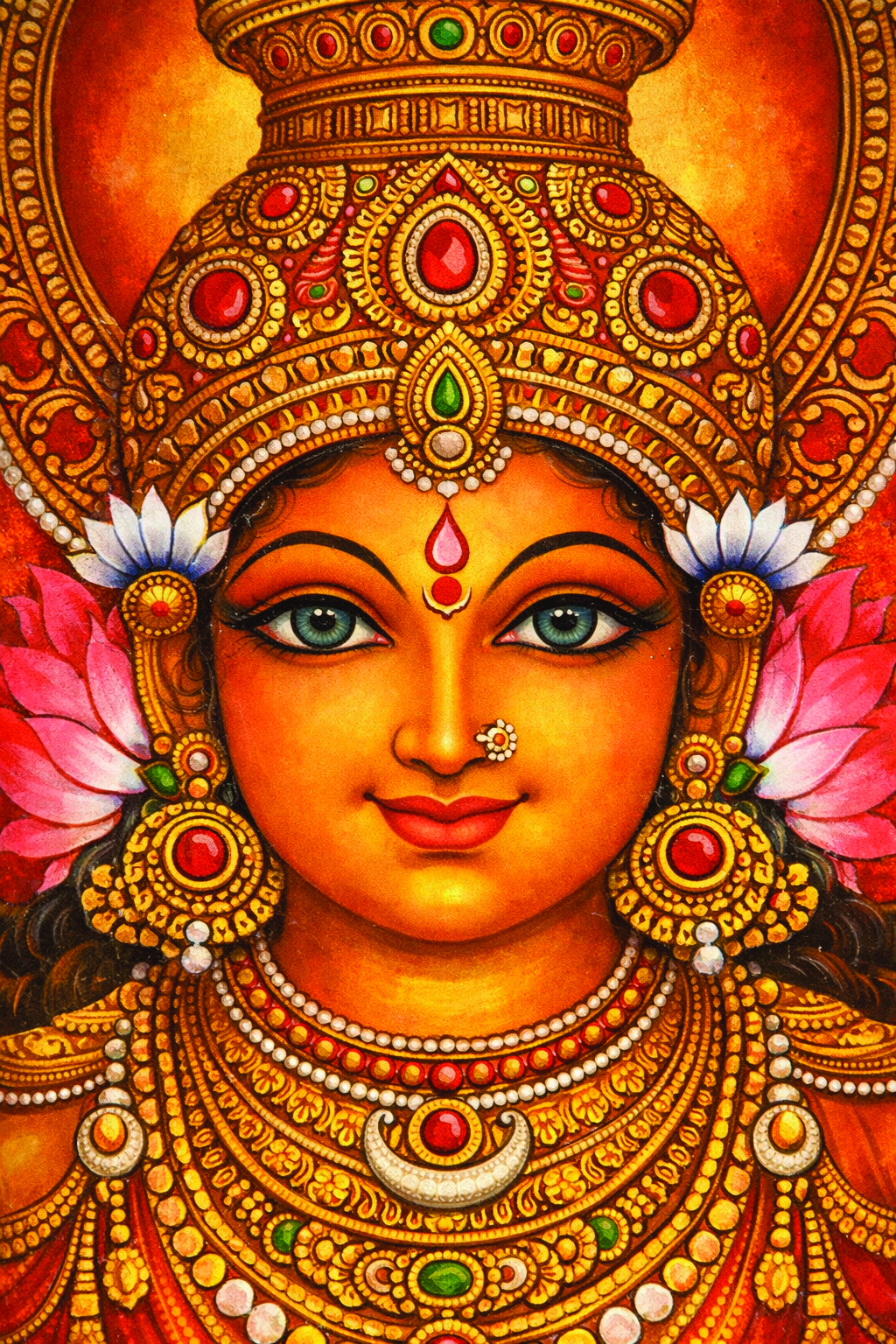
These superstitions were prevalent in Kerala as well. However, owing to the region’s strong tradition of devotion, people often sought divine help for relief from mental afflictions. At the Chottanikara Temple in Ernakulam, devotees worship Dēvī, the Goddess, with deep faith, believing that surrendering their problems to Her can alleviate all mental suffering.
In a broader sense, we are all ‘crazy’ to some degree, caught up in the illusory world of fleeting pleasures, even though the scriptures affirm that the only true reality is God. This type of madness can only be overcome by understanding our true nature. One way to achieve this is through devotion to the Divine Mother, who manifests in the form of Amma, our Guru.
Amma says, “Strange are the ways of a mahātmā (spiritually illumined soul). The human intellect cannot comprehend great souls and, therefore, may call them crazy. Their apparent craziness serves a purpose: to awaken humans to their own attachments to name, fame and wealth. Only when humans recognize their madness can it be transcended.”
The following legend illustrates how a devotee was freed from the influence of a yakṣi (demonic spirit) through the grace of the Divine Mother. Such spirits were said to roam forests, possibly as cautionary tales to deter people from travelling in dense woods at night — much of ancient Kerala was forested.
Guptan Nanpūtiri lived with his wife and children near the Chottanikara Temple. His Guru was Kōśappaḷḷi Ācchan Nanpūtiri. Guptan had been studying the Dēvī Bhāgavatam, a Purāṇic text venerating Dēvī as the Supreme, under his Guru’s guidance. Despite his devotion and diligent study, Guptan could not resist beautiful women.
One day, Guptan set out to attend a Kathakaḷi dance performance nine kilometres away, intending to return the Dēvī Bhāgavatam to his Guru, whose house was near the performance venue. Clutching the sacred text, he traversed the rugged forest. Pausing to rest on a boulder, he suddenly heard the soft tinkling of anklets. A strikingly beautiful woman appeared before him, introducing herself as Ittarattu Vāryasyar. She claimed to be travelling to the same performance and, expressing her gratitude at finding Guptan, asked if they could walk together. Unable to resist her charm, he agreed.
As they journeyed, she inquired about the book he carried. Guptan explained it was the Dēvī Bhāgavatam. Guptan became increasingly captivated by Ittarattu. He tried to put his arm around her but she dodged him with a laugh. Smiling sweetly, she asked him to put the book aside to fully embrace her, but out of deference to the sacred text, he respectfully refused. Upon reaching his Guru’s house, he asked her to wait outside, feeling it inappropriate to enter with a woman. She protested, but he assured her he would return quickly.
Kōśappaḷḷi noticed Guptan’s anxious demeanour. Suspecting something amiss, he had Guptan hold his arm and look outside. To Guptan’s horror, the beautiful woman had transformed into a fearsome yakṣi, with bloodshot eyes and protruding teeth. Trembling, Guptan clutched his Guru’s feet, begging for help.
Kōśappaḷḷi gave Guptan a wet cloth, chanting mantras into it, and instructed him to run to the Chottanikara Temple. Upon entering, he was to throw the cloth behind him over his head. Guptan ran, the yakṣi in pursuit. He reached the temple first, placed a foot over the threshold, and threw the cloth. But the yakṣi grabbed his other foot. He fell and prayed to the Divine Mother.
Moved by his devotion, Dēvī appeared, sword in hand, and pursued the yakṣi. Dēvī seized the yakṣi by the hair, beheaded her, and threw the head into the southern temple tank, now called Raktakuḷam (‘blood tank’). Grateful, Guptan performed abhiṣēka (ceremonial bath) to Dēvī and offered puffed rice to her — a practice that continues to this day. Transformed by this experience, Guptan overcame his weaknesses and dedicated his heart wholly to God.
Mental instability can also arise from external events that upset the mind terribly. According to the sthala-purāṇa (sacred legend) of the Chottanikara Temple, the temple was consecrated by a former dacoit named Kaṇṇappan, who terrorized the local population.
One day, he stole a calf. Intent on killing it, he brought it to his house, tied it to a tree, and went inside to fetch his axe. When he came out, he saw his young daughter caressing the calf. She begged him to let her keep the calf as her pet. Kaṇṇappan was moved by his daughter’s innocent plea and he agreed.
A few days after this incident, that little girl suddenly passed away. Kaṇṇappan was inconsolable. His grief was so intense that he fainted. The Divine Mother appeared in his dream and revealed that She had manifested as the calf to bring about a change in him. She told him to reform his ways by installing an idol of Her in that very place and to worship Her for the rest of his life.
Kaṇṇappan realized that the loss of his daughter was kārmic atonement for all his sinful actions. Channelling his grief into daily worship, Kaṇṇappan mended his ways and became instrumental in building the temple.
The temple, named Jyōtiannakkara (“one who enlightens”), later became Chottanikara. It flourished as a place of solace, where devotees still seek relief from mental afflictions through the grace of Ādi Parāśakti, the Supreme Mother. Rites of exorcism continue to be performed daily, and countless accounts speak of permanent healing through Her grace.From these stories, we learn that the ultimate remedy for all afflictions — mental or spiritual — is surrender to Amma. May she remove our troubles and guide us towards enduring peace.